Finding a self-healing book that actually reflects what recovery feels like is not easy. Most books offer advice that sounds right but does not stay with you. They talk about healing as if it is a clean, structured process, while real emotional recovery is often slow, uncomfortable, and deeply personal.
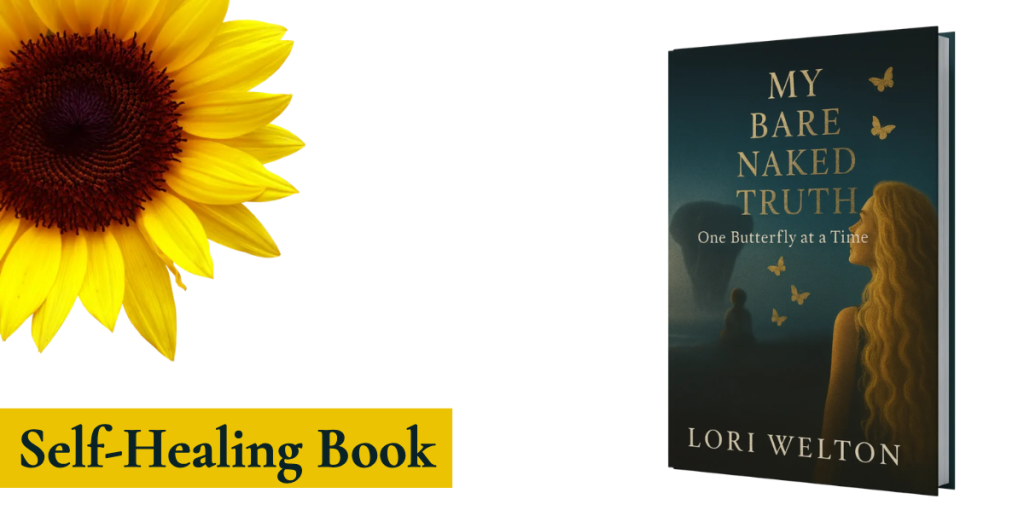
This is what makes My Bare Naked Truth: One Butterfly at a Time by Lori Welton different. Instead of offering advice from afar, it shares real experiences. The book shows how certain patterns develop and how you can start to understand them as time goes on. For many readers, it works as a self-healing book for women trying to make sense of long-standing emotional patterns.
When Survival Teaches You to Become Someone Else
One of the most honest parts of Welton’s story is how she talks about what she calls domestication. She does not treat it as just an idea. Instead, she shows how it slowly develops during childhood.
When a child grows up without feeling emotionally safe, they learn to adapt. Sometimes this means staying quiet. Other times, it means becoming the version of yourself that others find easier to accept.
Welton shares times when it felt safer to keep the peace instead of saying what she truly felt. Over time, these small choices become habits. You start to watch others before you speak, hold back your real reactions, and realize that approval often comes from fitting in, not from being yourself.
This is how the “good girl” identity starts. It is not just a personality trait, but a way of coping with your surroundings.
The Patterns That Follow You Into Adulthood
What makes this self-healing book relatable is how clearly it shows that these early patterns do not stay in the past.
As you grow older, these patterns show up in new ways. Relationships can feel more difficult than expected. Some situations bring out strong reactions that do not seem to fit. There is often a quiet pressure to hold everything together, even when you feel overwhelmed.
Welton talks about times when her feelings did not match what was actually happening. This disconnect can be confusing, especially when you cannot easily explain why you feel that way.
The book does not call these responses weaknesses. Instead, it sees them as learned behaviors that once helped you cope. Over time, though, they can start to hold you back and affect your relationships.
Facing the Internal Voices You Didn’t Choose
A key moment in Welton’s story is when she starts to question the voice in her own mind.
Not every thought we have is truly our own. Some come from years of criticism, comparison, or emotional neglect. When you hear these messages often enough, they start to feel real.
She explains how these inner patterns shaped the way she saw herself and lived her life. She was always trying to keep up a certain image while handling feelings that she had never really worked through.
There is a physical side to this, too. Sometimes anxiety shows up out of nowhere, or you feel uneasy for no clear reason. These feelings are not random—they are connected to what your body has learned to hold onto.
Healing That Goes Beyond Thinking Positively
One of the best things about My Bare Naked Truth: One Butterfly at a Time is that it does not treat healing as just a matter of changing your mindset.
Welton’s story shows that emotional experiences are not just memories in your mind—they are also stored in your body. This is why simply “thinking differently” is not always enough.
When she tries yoga and meditation, it is part of a bigger change. These practices are not shown as quick fixes, but as tools that helped her slow down and notice what she had been holding onto for years.
Becoming more aware is not always easy. It means facing emotions you once tried to avoid. But this is also where real change starts.
What Actually Helps in the Healing Process
As her story goes on, some changes start to happen. They are not sudden or dramatic. Instead, they come slowly, through small choices and steady awareness.
A few patterns stand out in her journey:
- Allowing yourself to rest without feeling guilty
- Letting go of the need to always seem in control
- Facing your past experiences instead of pushing them away
- Using movement to help release emotional tension
These changes might look simple, but they take a kind of honesty that is not always easy to find.
Learning to Choose Yourself Without Losing Others
People often think healing means cutting ties and starting fresh. Welton’s story shows a different way.
There are times when she reconnects with people in her life, but now she feels more grounded. Instead of falling into old habits, she responds with more clarity.
Setting boundaries becomes part of her journey. It is not about pushing people away, but about protecting what she is rebuilding inside herself.
This change lets her keep her relationships, but now she does not have to lose herself along the way.
Accepting That Healing Is Not Linear
By the end of her story, she does not claim to be completely transformed. Instead, she has a deeper understanding of what healing really means.
Some days you make progress. Other days, old feelings come back. Both are part of healing.
Welton’s story does not promise a perfect outcome. What it offers is something more realistic. It shows that healing is ongoing and that you are allowed to move through it at your own pace.
Final Thoughts
My Bare Naked Truth: One Butterfly at a Time stands out because it does not try to make emotional recovery seem simple. It shows how complex real experiences are and gives readers something they can see in their own lives.
For women who want to understand where their patterns come from and how to move forward without ignoring their past, this perspective is important. The book stays with you because it reflects what healing actually feels like, not what it is supposed to look like.